Self-published authors are responsible for every aspect of creating a book. Most excel at the writing part, but many hire professionals for the editing, formatting and marketing.
When I’m guiding clients through the self-publishing process, I find many come to me with a book cover which they have designed. This is fabulous, and it’s great to have a clear idea of what to put on the front of the book. Many self-publishing authors ask, should I design my own book cover, or is it better to hire a professional?
Designing a cover isn’t as simple as creating a front cover image. While an e-book only requires a front cover, a printed book cover must also contain the spine and back page too.
This is a single PDF file, which is uploaded to the platforms. Creating this file is not a straightforward job. It can be done in Canva, but Adobe InDesign is the industry standard for professional cover design.
Audiobooks have a different file again because it is a different dimension, typically square (e.g. 2400 x 2400 pixels).
Technicalities
There are also several technical requirements to consider.
- When designing the cover, it needs to have at least 3mm bleed. This means the image spreads over the edges of the book, ensuring there’s not a white line left when the cover is cut to size.
- The width of the spine also needs to be calculated using the page count and paper thickness, usually provided by the printer as PPI or a calculator.
Most platforms provide a calculator or template, so you don’t need to work this out manually, but the equation is:
Spine Width = Page Count × Paper Thickness or Spine Width = Page Count ÷ Pages Per Inch (PPI)
Note: Amazon KDP requires at least 79 pages before text can be printed on the spine, and IngramSpark a minimum of 40 pages.
- There needs to be a space left for the ISBN and barcode, which are generated automatically by platforms like KDP and IngramSpark. (No need to buy one from Thorpe-Bowker).
- You may have found the perfect image for your cover online. However, ensure you have the correct licence for any images used. Not all stock images allow commercial use on book covers.
- The same goes for fonts, for which you may need to purchase a licence.
Platforms
The two main platforms for printing and distributing books are Amazon KDP and IngramSpark. These each have their own specifications for covers. Amazon uses slightly different paper thicknesses to IngramSpark, so spine width varies.
See below how different the files look for each platform:
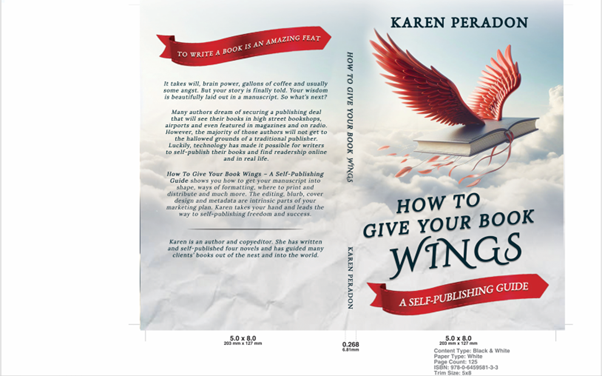
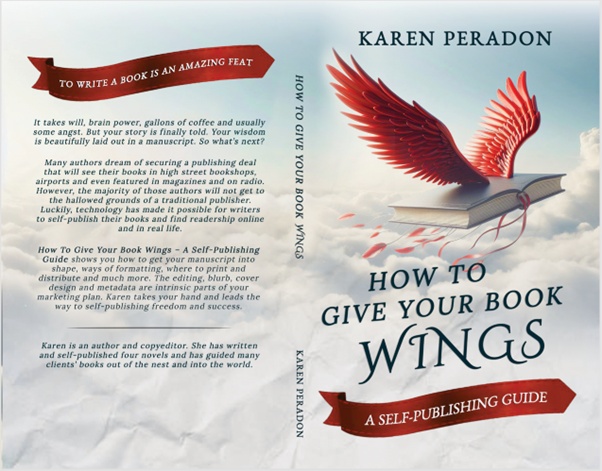
Both platforms have guidelines for cover creation. Go here for Amazon KDP and use Ingramspark’s cover template generator.
Design
People really do judge a book by its cover, and not just whether it’s pretty. When readers are browsing online, they need to be able to deduce immediately what the book is about. It needs to fit the genre expectations. For example, does the cover scream ‘romance’ with a bare-chested hunk on the front? Or ‘thriller’ with a silhouette against a sinister backdrop? Is it cartoony and quirky, hinting at humour?
As a writer, we may want a particular scene of the book on the cover or something more abstract, but that is less likely to sell books.
The cover also needs to stand out as a thumbnail among millions of other books. This involves the use of appropriate fonts, colour and layout.
So DIY or hire a professional?
Unless you have design experience or love learning, I highly recommend hiring a professional designer because even with suitable images or photos, it can easily look amateurish. Remember, this is the first thing a potential reader will see. It needs to look the part; that is, on-genre, professional, with appropriate fonts and size, and a clear layout.
Cover designers and graphic designers know where to place the elements on a page and what typeface and font sizes to use. They will ensure your title is readable at thumbnail size. They also have access to thousands of stock images.
Even with the cover templates and guidance, I prefer to have an expert prepare my book cover for me.
How does it work?
The more information you can give a designer, the better. If you have mocked up a cover, this is really helpful.
- A designer will usually have a form to create the brief.
- Most designers will come up with three concepts from the original brief. However, there could be more depending on the pricing of the service you have chosen.
- Once you have given feedback, the designer will produce another round of options. There are usually three revisions, but again this depends on the service paid for.
- Once you have approved the design, they will create the cover files for all the platforms and the e-book if required.
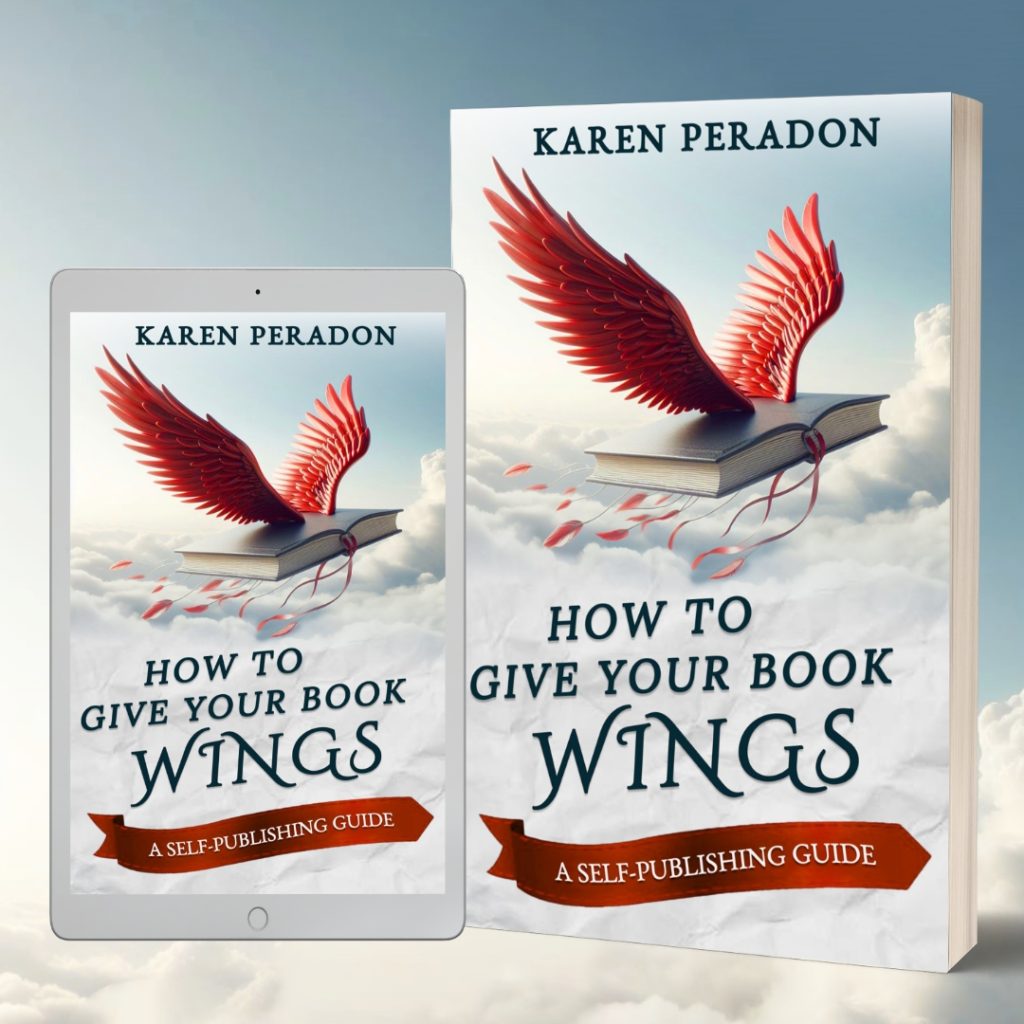
Many designers also include mock-ups that can be used for social media and advertising as part of the price (see featured image above as an example).
Where can you get a cover designer?
There are hundreds of cover designers. Some are larger companies, other solo freelancers. Here are some suggestions:
- 100 Covers – a US business that designs book covers. I have used this company for my cosy mysteries and can vouch for them.
- Miblart – I haven’t personally used them, but I know authors who have been happy with their services.
- Reedsy – a directory of skilled, professional cover designers.
- Facebook groups – e.g. Book Cover Gallery. These designers sell pre-made covers as well as bespoke covers.
- Ready-mades/pre-mades websites e.g. The Cover Collection
- Fiverr – I found a great designer on Fiverr a few years ago. She designed many covers for me with images I supplied and a thorough brief.
Word of warning – There are many cheap designers on Fiverr and other sites like Upwork, but you have to be careful with who you pick. There are some less-skilled designers. These suppliers are scattered all over the world, so that may result in language misunderstandings and awkward time differences. It also takes a long time to scroll through all the possibilities.
- Local – Check out businesses in your local area. I use Ven Visual here in Perth, Western Australia. This is my preferred option. It’s good to support your local community, and it’s much easier to build up a relationship.
How much does a cover cost?
This is one reason that many indie authors decide to design their own covers. A cover is not the cheapest element of publishing. Yet, there are a range of options. A professional cover designer creating concepts from scratch will charge AU$1500 plus. A ready-made may be around AU$300. 100 Covers charge around AU$380. My designer charges AU$450 – $600.
Conclusion
So, should I design my own book cover?
Book cover design is very important and can make or break a book. If you love design and have the tech know-how to create a cover design, that’s wonderful. However, with less experience, this can be time-consuming and frustrating. There are many professionals who can create beautiful covers. I believe your book deserves this investment.
If you want to talk about cover design and self-publishing, send me a message.